A-Goal Initiative Proposes Cost-of-Living Tax Relief Measures for Nigeria’s 2027 Finance Bill
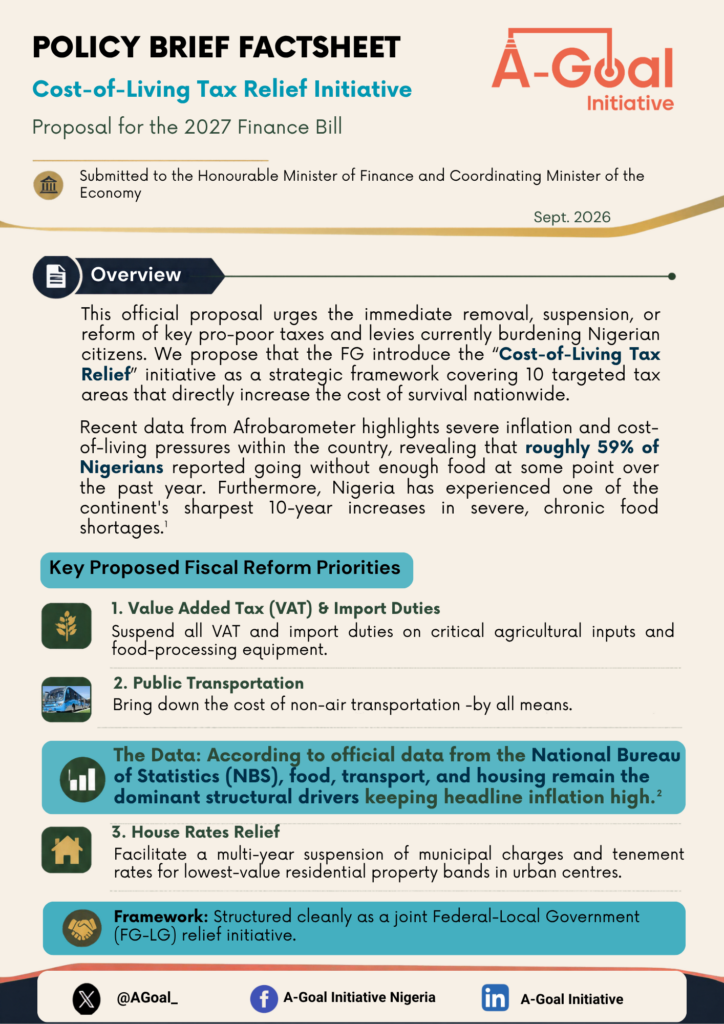
A-Goal Initiative has submitted a Cost-of-Living Tax Relief proposal to the Minister of Finance, recommending six reforms across food, transport, housing, electricity and personal income for Nigeria's 2027 Finance Bill.
Key takeaways
- Stakeholder engagement: The Minister of Finance invited proposals from stakeholders to inform the next phase of Nigeria’s tax reforms.
- Core focus: The proposal concentrates heavily on food cost, affordability, and other essential needs.
As Nigeria prepares to refine its economic policies through the 2027 Finance Bill, the A-Goal Initiative has submitted a policy proposal to the Minister of Finance and Coordinating Minister of the Economy. The submission outlines strategic tax and fiscal measures designed to ease mounting cost-of-living pressures.
Titled “Cost-of-Living Tax Relief Initiative,” the proposal identifies several taxes, levies, and charges that have a direct, compounding impact on the cost of food, transportation, housing, and general household expenses.
The proposal follows an open invitation for submissions issued by the Federal Government for the 2027 Finance Bill. The Ministry of Finance announced at the close of the submission timeline for memoranda that it had received 134 stakeholder submissions to help shape the next phase of Nigeria’s tax reforms.
What we proposed
The A-Goal Initiative has recommended key reforms that directly impact the cost of living for all Nigerians, focusing strictly on basic citizen needs: food, transportation, housing, electricity, and personal income.
1. VAT and import duty relief on essential agricultural inputs and food-processing equipment
The proposal advocates for the suspension of Value-Added Tax (VAT) and import duties on critical agricultural inputs and food-processing equipment. This measure is designed to reduce the cost of food production and improve affordability for every individual in Nigeria.
2. Food haulage tax reform
The submission calls for a nationwide moratorium on multiple state-level produce haulage fees and interstate transit taxes on foodstuffs. The objective is to eliminate additional costs arising from road checkpoints and transit levies. A-Goal believes fewer transit charges will translate into lower transport costs, cheaper food distribution to markets, and ultimately reduced food prices.
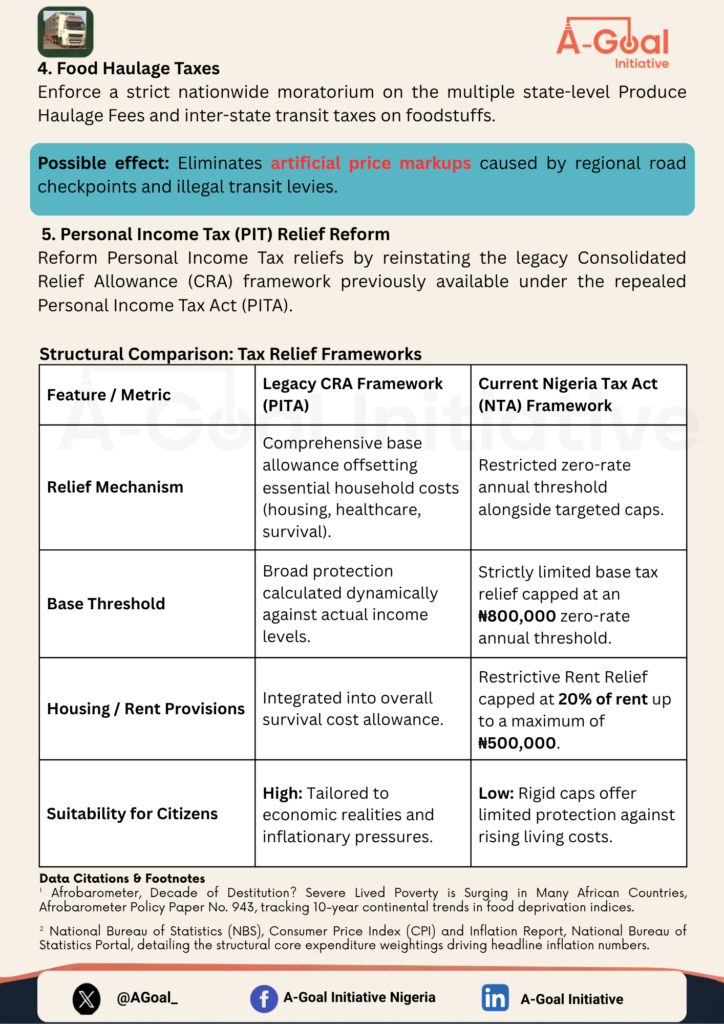
3. Personal income tax relief
The initiative recommends a reform of personal income tax reliefs, including revisiting the former Consolidated Relief Allowance (CRA) framework. This adjustment would provide broader, more appropriate tax relief to individual taxpayers, ensuring more disposable income remains available to meet everyday living expenses.
4. Relief on low-value financial transactions
The proposal calls for the removal of taxes and charges, or the establishment of a substantial exemption threshold, for low-value, small-scale financial transactions to protect vulnerable earners.
5. Public transportation relief
The initiative demands targeted measures aimed at reducing the cost of non-air public transportation by removing or reducing specific taxes on transport services, thereby lessening the financial burden passed on to commuters.
6. Housing rate relief
A multi-year suspension of certain municipal charges and tenement rates for low-value residential properties in urban centres has been proposed. The goal is to alleviate the financial strain on households by lowering the recurring costs of maintaining a home.
The bigger picture
The A-Goal proposal frames these measures as a critical cost-of-living intervention driven by fiscal policy, rather than a blanket reduction in taxation. Its underlying philosophy is to examine how taxes, levies, and regulatory charges directly feed into the final prices paid by consumers.
This proposal is particularly timely for the ongoing 2027 Finance Bill process, which the Federal Government intends to use to address implementation challenges, respond to shifting economic realities, and preserve the foundational principles of Nigeria’s tax reforms.
Sources
- Afrobarometer, Decade of Destitution? Severe Lived Poverty is Surging in Many African Countries, Policy Paper No. 943 — tracking 10-year continental trends in food deprivation indices.
- National Bureau of Statistics (NBS), Consumer Price Index (CPI) and Inflation Report, National Bureau of Statistics Portal — detailing the structural core expenditure weightings driving headline inflation numbers.
More from our work.

Keeping the Promise of Freedom: Reflection on Nigeria at 66
As Nigeria marks 66 years of independence, we reflect on what the struggle was truly for: quality, responsive public services, and a society anchored on transparency, fairness and opportunity.
Read press release →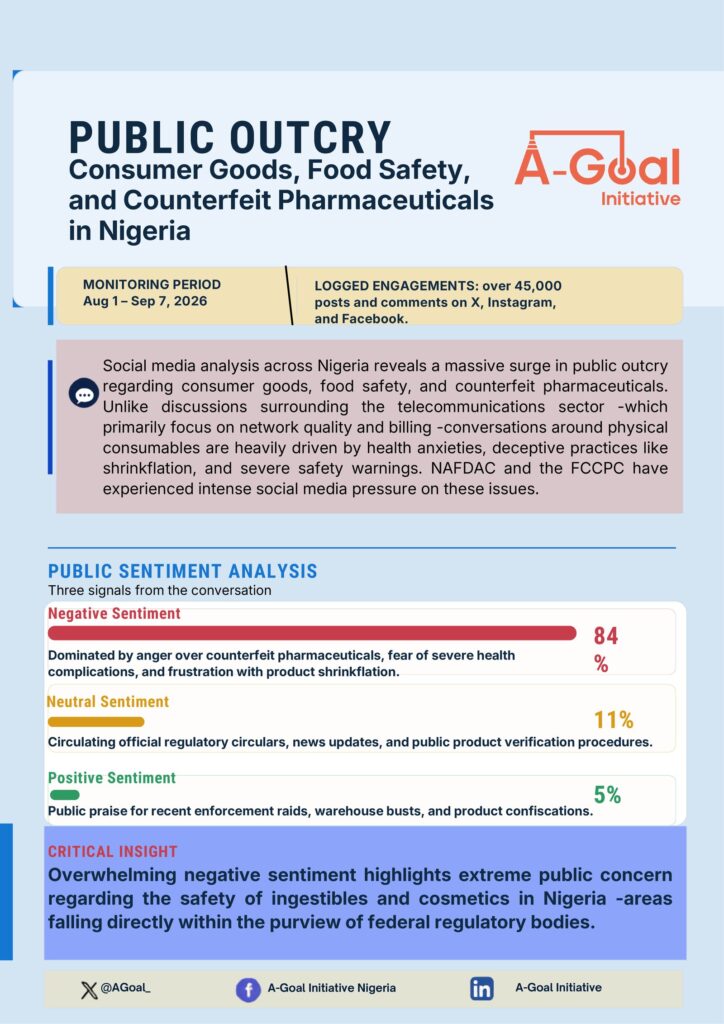
Public Outcry over Fake Consumer Goods, Food Safety and Counterfeit Pharmaceuticals in Nigeria – 12th Sept. 2026
Monitoring period 1 August to 7 September 2026. Over 45,000 posts and comments logged on X, Instagram and Facebook.